
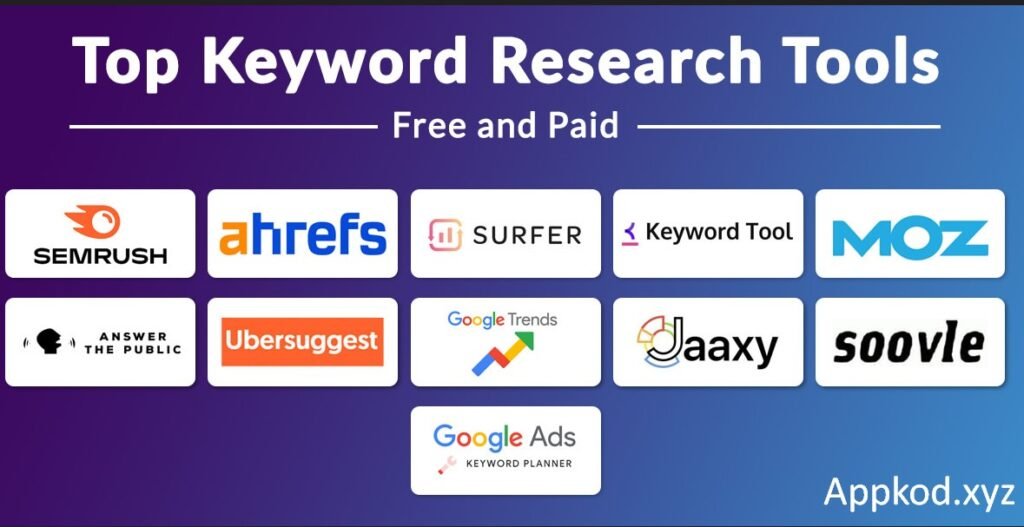
In the ever-evolving landscape of search engine optimization (SEO), guessing what your audience wants is a recipe for failure. To rank at the top of Google, you need concrete data, precise targeting, and a deep understanding of user intent. This is where advanced SEO software becomes indispensable. When exploring the most effective keyword analysis tools appkod provides a unique perspective on leveraging data to outperform competitors and drive sustainable organic growth.
The right tools do much more than simply spit out search volumes. They reveal competitive gaps, uncover hidden long-tail opportunities, and map out the exact phrases your target audience uses when they are ready to buy. Without these insights, even the best content remains invisible.
In this comprehensive guide, we will explore the core functions of these platforms, evaluate the top software on the market, and break down a proven framework for conducting keyword research. Whether you are an experienced digital marketer or a business owner looking to scale, this guide will equip you with the knowledge to dominate the search engine results pages (SERPs).
What Are Keyword Analysis Tools?
Keyword analysis tools are specialized digital marketing platforms designed to extract, evaluate, and categorize search queries entered by users into search engines like Google, Bing, and YouTube. These software solutions scrape billions of data points to provide actionable SEO intelligence.
Instead of relying on intuition, marketers use these platforms to discover exactly what their target audience is looking for. The tools provide critical data points, including monthly search volume, the level of competition, and the estimated cost for pay-per-click (PPC) advertising.
Furthermore, modern platforms analyze historical search trends and seasonal fluctuations. This allows content creators to anticipate spikes in demand and publish optimized content right when users are actively searching for it. Ultimately, these tools bridge the gap between a business’s offerings and the consumer’s exact search queries.
The Role of Keyword Research in EEAT and Helpful Content
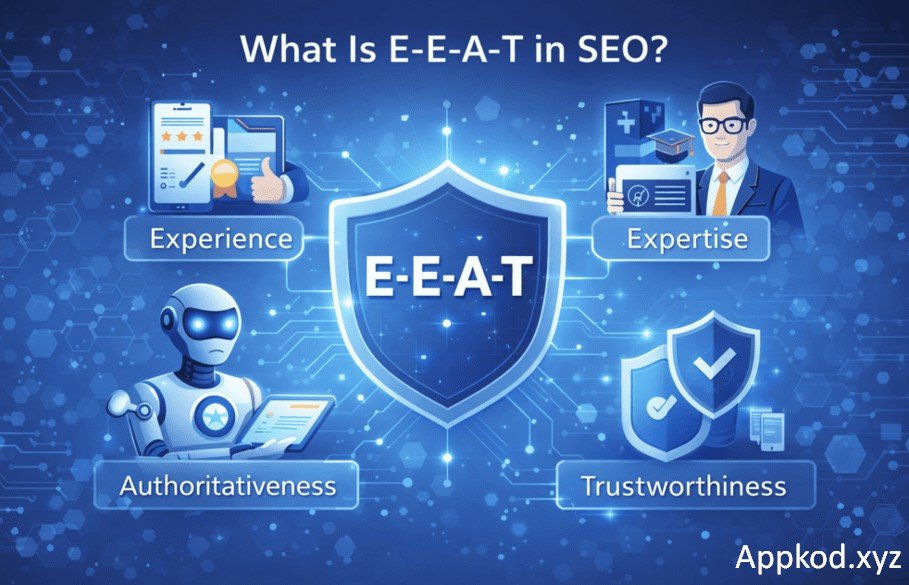
Google’s search algorithms have shifted dramatically over the past few years. The introduction of the Helpful Content Update and the stringent focus on EEAT (Experience, Expertise, Authoritativeness, and Trustworthiness) mean that merely stuffing keywords into a webpage no longer works.
Aligning with User Intent
Today, keyword research is fundamentally about understanding human psychology. When you analyze a keyword, you are analyzing a specific problem a user is trying to solve. By identifying the correct search terms, you can craft comprehensive, expert-level content that directly answers the user’s query, thereby satisfying Google’s Helpful Content requirements.
Building Topical Authority
Search engines reward websites that demonstrate deep expertise in a specific niche. Keyword tools help you build topical maps—clusters of related keywords that cover a subject exhaustively. By creating interlinked content around these semantic clusters, you signal to Google that your website is an authoritative resource, which directly boosts your EEAT signals.
Top 5 Keyword Analysis Tools on the Market
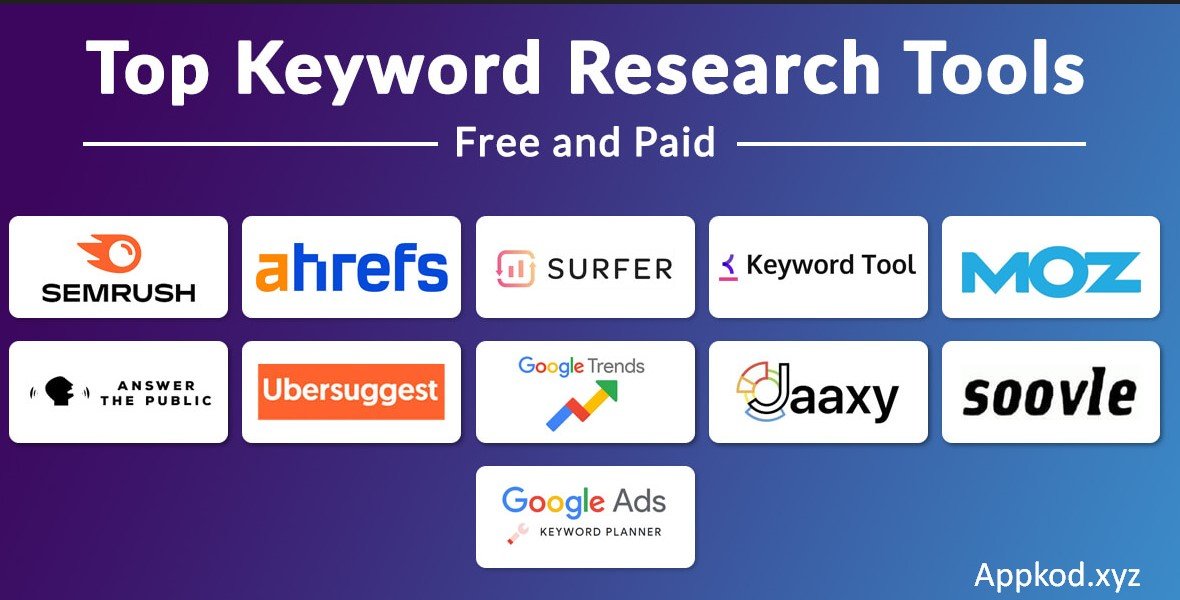
With countless options available, selecting the right platform can be overwhelming. Here is a breakdown of the industry’s most powerful tools and what makes each of them unique.
1. Semrush
Semrush is widely considered the gold standard for all-in-one digital marketing. It boasts an incredibly massive keyword database and offers deep insights into competitor strategies.
- Best Feature: The Keyword Magic Tool generates millions of variations from a single seed word, categorizing them by search intent.
- Why Use It: It excels at competitive analysis. You can enter a competitor’s URL and instantly see every keyword they rank for, allowing you to reverse-engineer their success.
2. Ahrefs
Ahrefs started as a backlink analysis tool but has evolved into a premier SEO suite. It is highly favored by technical SEO professionals and content marketers alike.
- Best Feature: The Keyword Explorer provides a highly accurate Keyword Difficulty (KD) score and estimates the exact number of backlinks needed to rank on the first page.
- Why Use It: Ahrefs offers unique clickstream data, showing not just how many people search for a term, but how many actually click on the results.
3. Google Keyword Planner
Directly integrated into the Google Ads ecosystem, this free tool provides data straight from the source.
- Best Feature: Highly accurate cost-per-click (CPC) bidding estimates and historical trend data.
- Why Use It: While designed primarily for paid advertising, it is an excellent starting point for organic keyword discovery. It shows you exactly how lucrative a keyword is based on advertiser bids.
4. KW Finder by Mangools
KWFinder is celebrated for its highly intuitive, user-friendly interface. It strips away the overwhelming dashboards of enterprise tools to focus purely on keyword discovery.
- Best Feature: Spot-on identification of low-hanging fruit—long-tail keywords with genuinely low SEO difficulty.
- Why Use It: It is perfect for beginners, affiliate marketers, and small business owners who need quick, actionable insights without a steep learning curve.
5. AnswerThePublic
Rather than traditional metrics, AnswerThePublic focuses on the questions people are asking. It scrapes autocomplete data from search engines and visualizes it into a branching web of queries.
- Best Feature: Visualizes “who, what, where, when, why, and how” questions related to your seed keyword.
- Why Use It: It is the ultimate tool for content ideation. By answering the specific questions your audience is asking, you drastically increase your chances of capturing Google’s Featured Snippets.
Comparison Table: Which Tool Fits Your Needs?
| Tool Name | Best For | Standout Feature | Pricing Tier |
| Semrush | Comprehensive SEO & Competitor Analysis | Keyword Magic Tool | Premium ($129+/mo) |
| Ahrefs | Backlink Data & Search Volume Accuracy | Clickstream Data Metrics | Premium ($99+/mo) |
| Google Keyword Planner | PPC Campaigns & Baseline Data | Direct Google Data | Free (Requires Ads Account) |
| KWFinder | Finding Long-Tail Opportunities | Highly Accurate KD Score | Mid-Range ($29+/mo) |
| AnswerThePublic | Content Ideation & NLP Queries | Search Query Visualization | Freemium |
Free vs. Paid Tools: Pros & Cons
Should you invest in a premium subscription or stick to free alternatives? Here is a breakdown to help you decide.
Free Keyword Tools
Pros:
- Cost-effective: Zero financial investment required.
- Great for beginners: Helps you learn the basics of SEO metrics without feeling overwhelmed.
- Access to baseline data: Tools like Google Keyword Planner offer highly accurate primary data.
Cons:
- Limited metrics: Often lack advanced data like Keyword Difficulty or click-through rates.
- Usage limits: Heavily restricted daily searches.
- No competitor data: You cannot seamlessly reverse-engineer a rival’s ranking strategy.
Paid Keyword Tools
Pros:
- Comprehensive insights: Deep dives into backlink requirements, SERP history, and advanced metrics.
- Competitor analysis: The ability to see exactly what is driving traffic to competing sites.
- Workflow integration: Features for tracking rankings, auditing sites, and managing content calendars.
Cons:
- Expensive: Monthly subscriptions can be costly for startups.
- Steep learning curve: The sheer volume of data can be intimidating for new marketers.
Decoding Advanced Keyword Metrics
To maximize the potential of your chosen software, you must understand how to interpret the data it provides. Here are the core metrics you need to master.
1. Search Volume
Search volume indicates the average number of times a specific query is searched per month. While high-volume keywords seem attractive, they are often incredibly competitive. Consequently, targeting moderate-volume keywords often yields better, faster results.
2. Keyword Difficulty (KD)
This metric (usually graded on a scale of 1 to 100) estimates how hard it will be to rank in the top 10 organic results. It is primarily calculated based on the domain authority and backlink profiles of the pages currently ranking. A lower KD score means an easier path to page one.
3. Search Intent
Search intent is the fundamental reason behind a user’s query. It is broken down into four categories:
- Informational: The user wants to learn something (e.g., “how to tie a tie”).
- Navigational: The user is looking for a specific website (e.g., “Facebook login”).
- Commercial: The user is researching options before buying (e.g., “best keyword analysis tools”).
- Transactional: The user is ready to make a purchase (e.g., “buy Semrush subscription”).
4. Cost-Per-Click (CPC)
CPC shows the average amount advertisers pay for a single click on this keyword in Google Ads. A high CPC strongly indicates high commercial intent; if businesses are willing to pay $15 per click, that keyword drives serious revenue.
Semantic SEO, NLP, and Entity Optimization
Modern search engines do not just read words; they understand concepts. Google uses Natural Language Processing (NLP) to comprehend the context of a webpage.
Moving Beyond Exact Match
In the past, you had to repeat a target keyword multiple times. Today, this is considered keyword stuffing. Instead, successful SEO requires integrating LSI (Latent Semantic Indexing) keywords and related entities.
For example, if your primary keyword is “digital marketing,” an NLP-optimized article must naturally include contextual entities like “social media,” “conversion rates,” “content strategy,” and “ROI.” Keyword analysis tools help identify these semantic relationships, ensuring your content is seen as a comprehensive, authoritative resource by Google’s AI algorithms.
How to Avoid Keyword Cannibalization
Keyword cannibalization occurs when multiple pages on your own website compete for the exact same search query. When this happens, Google becomes confused about which page to rank, often resulting in both pages being pushed down the SERPs.
To prevent this, you must map your keywords meticulously. A robust keyword analysis tool will help you audit your existing site. If you find two pages targeting the same intent, you have two choices: consolidate the content into one definitive master guide using 301 redirects, or re-optimize one page to target a distinctly different long-tail variation. Every page on your site must have a unique purpose and a unique primary keyword.
Step-by-Step Keyword Research Framework
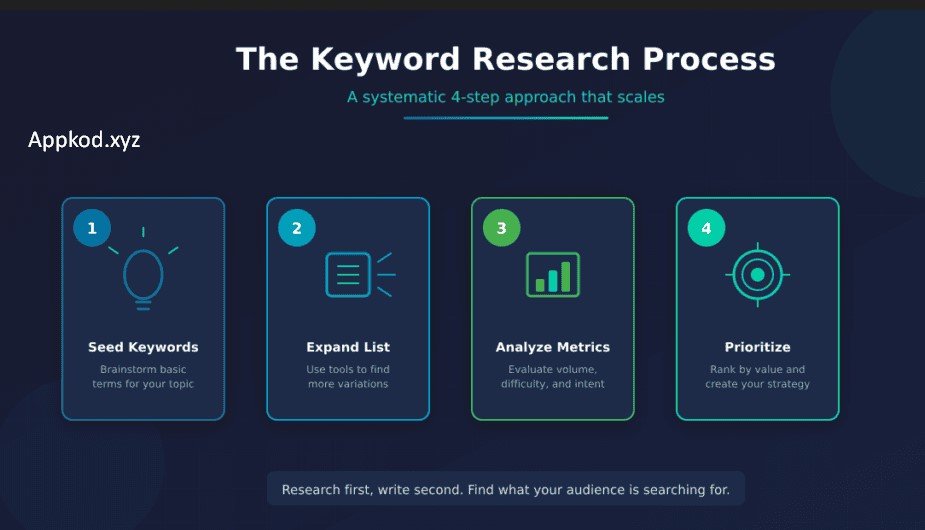
Knowing how to use the tools is only half the battle. You need a repeatable process. Here is an expert-level workflow to drive organic traffic.
Step 1: Brainstorm Core Topics (Seed Keywords)
Start by identifying broad topics relevant to your business. If you run a fitness brand, your seed keywords might be “weight loss,” “muscle building,” or “home workouts.” Enter these broad terms into your chosen tool.
Step 2: Filter for Long-Tail Variations
Broad terms are too competitive. Use the tool’s filters to find long-tail keywords—phrases containing three or more words. Set your filters to show keywords with a Search Volume over 200 and a Keyword Difficulty under 40. This reveals the “low-hanging fruit.”
Step 3: Analyze Competitor Gaps
Run your top three competitors through a domain overview tool. Look for the “Keyword Gap” feature. This will show you exactly which high-traffic keywords your competitors are ranking for, but your website is missing. These gaps are your immediate content priorities.
Step 4: Verify Search Intent Manually
Never blindly trust a tool’s intent classification. Before writing, type your target keyword into Google incognito. Look at the top five results. Are they blog posts, product pages, or videos? You must match the format and intent of the currently ranking pages, or Google will not rank your content.
Step 5: Group and Cluster
Instead of writing 10 short articles targeting 10 similar keywords, cluster them together. Group variations of a keyword into one comprehensive, long-form guide. This establishes topical authority and allows a single page to rank for hundreds of related terms simultaneously.
The Agency Advantage for SEO Success
Mastering SEO is a time-intensive process that requires constant adaptation to algorithm updates. While individual webmasters can manage basic research, scaling a business demands professional execution.
When it comes to advanced strategy, relying on the keyword analysis tools appkod experts utilize ensures that no data point is overlooked. Professional digital marketing agencies combine premium enterprise tools with years of hands-on experience. They do not just find keywords; they integrate them into a holistic strategy that includes technical SEO audits, high-quality content creation, and authoritative link building. By partnering with experts, businesses can bypass the costly trial-and-error phase and accelerate their path to the top of the search results.
Frequently Asked Questions (FAQs)
1. What is the best keyword analysis tool for a complete beginner?
For beginners, KWFinder and Ubersuggest are highly recommended. They offer intuitive, clean interfaces that highlight essential metrics—like search volume and difficulty—without overwhelming the user with complex technical SEO data.
2. How often should I perform keyword research?
Keyword research is not a one-time task. You should conduct a major keyword audit at least once a quarter. Additionally, you should perform targeted research every time you plan a new content cluster, launch a new product, or notice a drop in your organic traffic.
3. What exactly is Keyword Difficulty (KD)?
Keyword Difficulty is an estimated metric that predicts how hard it will be to rank on the first page of Google for a specific term. It evaluates the backlink profiles and domain authority of the current top-ranking pages. A lower score indicates an easier keyword to rank for.
4. Are free keyword tools actually accurate?
Free tools like Google Keyword Planner are highly accurate for search volume and CPC because the data comes directly from Google. However, free tools generally lack accurate KD scores and competitive backlink analysis, which are crucial for organic SEO strategy.
5. How does search intent affect my ranking potential?
Search intent is the most critical ranking factor. If a user searches for “buy running shoes” (transactional intent) and you try to rank an informational blog post about the history of shoes, Google will not rank it. Your content format must perfectly match what the user is trying to accomplish.
6. What are long-tail keywords and why do they matter?
Long-tail keywords are highly specific search phrases containing three or more words (e.g., “best running shoes for flat feet”). While they have lower search volumes, they have significantly lower competition and much higher conversion rates because the user’s intent is highly specific.
7. Can I succeed in SEO without using premium keyword analysis tools?
While it is technically possible to succeed using free tools and manual Google searches, it is incredibly inefficient. Premium tools save hundreds of hours by instantly aggregating data, revealing competitor strategies, and identifying low-competition opportunities that are nearly impossible to find manually.
8. Why should I hire an agency to do my keyword research?
An agency brings enterprise-level tools and seasoned expertise to your strategy. They understand how to interpret nuanced data, avoid keyword cannibalization, and build topical maps that align with Google’s latest algorithmic updates, ensuring a higher and faster return on investment.
Conclusion
Mastering search engine optimization begins with understanding exactly what your audience is searching for. By leveraging premium platforms, you eliminate the guesswork and build a strategy grounded in hard data. From identifying low-competition long-tail phrases to deciphering user intent, these tools are the foundation of any successful digital marketing campaign.
Remember, data is only as valuable as the strategy behind it. By implementing the step-by-step framework outlined above, optimizing for semantic entities, and focusing on EEAT, you can turn keyword insights into a steady stream of highly targeted, converting traffic. Start analyzing, start writing, and watch your rankings climb in 2026 and beyond.