

Entering the Australian digital market requires more than just a functional website; it demands a highly targeted search engine optimization strategy. Whether you operate locally within Sydney or manage a US-based e-commerce store expanding internationally, understanding the nuances of Australian search behavior is non-negotiable. Google dominates the search landscape in Australia, holding over 90% of the market share. Consequently, aligning your digital assets with Google’s localized algorithms forms the bedrock of online success.
This SEO beginner guide for Australia by AppKod serves as your comprehensive roadmap. We designed this resource to strip away technical jargon and provide actionable, proven tactics. AppKod brings years of expertise in digital marketing, web design, and search engine optimization to help businesses navigate competitive landscapes.
By the end of this guide, you will understand how to build a robust website architecture, craft content that resonates with Australian consumers, and establish high-quality local authority. Let us dive into the core strategies that turn invisible websites into industry leaders.
Why Australian SEO is Different ?

Optimizing a website for an Australian audience requires specific adjustments to standard SEO practices. While the overarching principles of search engine optimization remain universal, localization signals play a massive role in determining where your pages rank.
The Importance of .com.au Domains
Search engines prioritize relevance. For an Australian user searching for services or products, a .com.au domain immediately signals local relevance. Securing a local Country Code Top-Level Domain (ccTLD) drastically improves your chances of ranking highly on Google.com.au. To register a .com.au domain, businesses typically need an Australian Business Number (ABN). If you operate a US company, you might need to establish a local business entity or use a global .com domain optimized with strict geolocation targeting.
Local Server Hosting
Website speed remains a critical ranking factor. Hosting your website on a server physically located in Australia (such as in Melbourne or Sydney) reduces latency for local visitors. Faster load times lead to lower bounce rates, higher user engagement, and stronger rankings. If utilizing local hosting is not feasible, implementing a premium Content Delivery Network (CDN) with robust Australian nodes becomes mandatory.
Australian Search Behavior and Intent
Australians utilize distinct vocabulary and spelling conventions. Content written exclusively in US English may alienate local readers or miss crucial search volumes. Furthermore, Australian consumers heavily rely on mobile devices to perform local “near me” searches. Adapting your strategy to accommodate local vernacular and mobile-first indexing ensures you capture high-intent traffic.
Core Pillars of SEO for the Australian Market

Achieving long-term visibility requires a balanced approach. We categorize effective optimization into three distinct pillars.
1. Technical SEO Foundation
Technical SEO ensures search engines can crawl, understand, and index your website without encountering errors.
- Mobile Responsiveness: Google utilizes mobile-first indexing. Your site must adapt flawlessly to smartphones and tablets.
- Site Speed Optimization: Compress images, minify CSS and JavaScript, and leverage browser caching to achieve load times under three seconds.
- Clean URL Structures: Utilize short, descriptive URLs containing your primary keywords.
- XML Sitemaps and Robots.txt: Guide search engine bots effectively by submitting a well-structured XML sitemap to Google Search Console.
2. On-Page Optimization
On-page optimization involves refining the visible content and HTML source code of individual pages.
- Title Tags and Meta Descriptions: Craft compelling, click-worthy metadata that includes your target keywords and a clear call-to-action.
- Header Hierarchy (H1, H2, H3): Structure your content logically. Use only one H1 tag per page, followed by H2s for main sections and H3s for sub-points.
- Internal Linking: Connect related pages within your website to distribute link equity and guide users through your sales funnel.
- Image Alt Text: Provide descriptive text for all visual elements to improve accessibility and image search rankings.
3. Off-Page Authority Building
Off-page SEO focuses on external signals that prove your website’s credibility.
- Backlink Acquisition: Earn links from reputable Australian domains, such as local news outlets, industry directories, and educational institutions.
- Social Signals: While not a direct ranking factor, active social media engagement drives traffic and brand awareness.
- Guest Posting: Contribute high-quality articles to authoritative Australian blogs within your niche.
Keyword Research for an Australian Audience

Keyword research dictates the direction of your entire campaign. Targeting the right terms prevents wasted effort and ensures you attract visitors ready to convert.
Understanding Local Terminology
Words used in the US often differ from those used in Australia. For example, a US audience searches for “vacation rentals,” while Australians search for “holiday accommodation.” A US search for “sneakers” translates to “runners” or “sneakers” depending on the region in Australia. Utilizing local vernacular is critical for capturing accurate search volume.
Top Tools for AU Keyword Research
Leverage premium tools to uncover lucrative search terms:
- Google Keyword Planner: Excellent for identifying local search volumes and commercial intent.
- Ahrefs / Semrush: Use the location filter to analyze the Australian database exclusively.
- Google Trends: Monitor seasonal shifts and rising topics specific to Australian states and territories.
Search Volume vs. Intent
High search volume means nothing if the intent does not match your business goals.
- Informational Intent: Users want answers (e.g., “how to fix a leaking tap”).
- Navigational Intent: Users look for a specific website (e.g., “Bunnings website”).
- Commercial Intent: Users compare options (e.g., “best SEO agencies in Sydney”).
- Transactional Intent: Users are ready to buy (e.g., “hire plumber Melbourne”).
Focus your primary efforts on commercial and transactional keywords to drive revenue.
Content Strategy that Converts Down Under
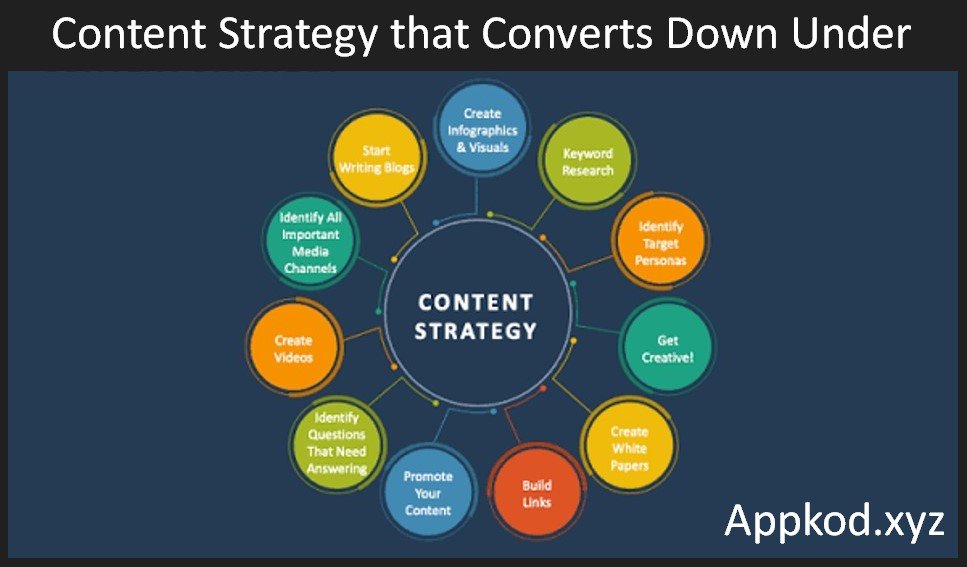
Content remains the undisputed king of digital marketing. However, generating generic articles no longer satisfies search algorithms.
Writing for the Aussie Consumer
Adopt a tone that resonates with the local demographic. Australians generally appreciate straightforward, authentic, and slightly conversational content. Ensure your spelling aligns with UK/Australian standards (e.g., using “optimise” instead of “optimize” when writing exclusively for a local blog, though adapting based on your specific brand voice is acceptable).
EEAT Principles in Content Creation
Google evaluates content based on Experience, Expertise, Authoritativeness, and Trustworthiness (EEAT).
- Experience: Share first-hand knowledge or case studies.
- Expertise: Ensure content is written or reviewed by qualified professionals.
- Authoritativeness: Build a strong author biography and earn industry mentions.
- Trustworthiness: Provide transparent contact information, secure browsing (HTTPS), and cite reputable sources.
Structuring Content for Featured Snippets
Featured snippets appear at the absolute top of Google search results. To capture these positions:
- Answer questions directly within the first paragraph under a heading.
- Use bulleted or numbered lists for step-by-step guides.
- Include comparison tables to summarize complex data efficiently.
Local SEO: Dominating Local Search in AU

For brick-and-mortar businesses or service providers operating in specific regions, local SEO provides the highest return on investment.
Optimizing Google Business Profile for Australian Cities
Your Google Business Profile (GBP) acts as your digital storefront.
- Claim and verify your listing.
- Ensure your Name, Address, and Phone Number (NAP) remain consistent across the web.
- Select the most accurate primary category.
- Upload high-resolution images of your premises, team, and products.
Building Local Citations
A citation is any online mention of your business NAP. Submit your business details to authoritative Australian directories such as:
- Yellow Pages Australia
- TrueLocal
- Yelp Australia
- LocalSearch
Managing Online Reviews
Reviews heavily influence both rankings and consumer trust. Actively encourage satisfied customers to leave positive feedback on your Google Business Profile. Always respond professionally to both positive and negative reviews, demonstrating that you value customer feedback.
Read More: seo agency in australia appkod thealite
Global SEO vs. Australian Local SEO
Understanding the distinction between global and local approaches helps allocate resources efficiently.
| Feature | Global SEO Strategy | Australian Local SEO Strategy |
| Target Audience | Broad, international users | Specific Australian cities or nationwide |
| Domain Preference | .com, .net, .org | .com.au, .net.au |
| Keyword Focus | General, high-volume terms | Geo-modified terms (e.g., “SEO Sydney”) |
| Content Language | Standard US or UK English | Australian English nuances |
| Link Building | High DR global sites | Local directories, .com.au domains |
| Primary Platforms | Standard Google Search | Google Maps, Google Business Profile |
Pros and Cons of Targeting the Australian SEO Market

Every market presents unique opportunities and challenges. Evaluating these factors helps set realistic expectations.
Pros:
- High Purchasing Power: Australian consumers possess significant disposable income, leading to higher conversion values.
- Lower Competition: Compared to the heavily saturated US market, many niches in Australia remain underserved.
- Clear Cultural Nuances: The distinct culture makes it easier to create highly targeted, personalized marketing campaigns.
- Strong Mobile Adoption: A highly connected population ensures mobile SEO strategies yield excellent results.
Cons:
- Geographical Size: Australia’s massive landmass makes nationwide shipping and logistics challenging for e-commerce.
- Smaller Search Volumes: The smaller population translates to lower overall search volumes compared to global markets.
- Strict Regulations: Adhering to local data protection and advertising standards requires careful legal consideration.
- Time Zone Differences: Managing campaigns from the US requires adjusting to significant time zone disparities.
Measuring Your SEO Success

Executing strategies without tracking data leads to blind decision-making. Establishing clear measurement protocols guarantees continuous improvement.
Setting Up Google Analytics & Search Console
Immediately connect your website to Google Analytics 4 (GA4) and Google Search Console (GSC).
- GA4 tracks user behavior, demographic data, and conversion events.
- GSC monitors indexing status, keyword impressions, and technical site health.
Key Performance Indicators (KPIs) to Track
Focus on metrics that directly impact your bottom line:
- Organic Traffic Growth: The total number of visitors arriving via non-paid search results.
- Keyword Rankings: The positions of your target terms on search engine results pages.
- Bounce Rate: The percentage of users who leave your site after viewing only one page.
- Conversion Rate: The percentage of visitors completing a desired action (e.g., form fill, purchase).
- Click-Through Rate (CTR): The ratio of users who click on your link compared to total impressions.
Frequently Asked Questions
1. What is the most important ranking factor for Australian SEO?
While Google uses hundreds of factors, high-quality, localized content paired with strong, relevant backlinks from Australian domains (.com.au) consistently drives the most impact.
2. Do I absolutely need a .com.au domain to rank in Australia?
You do not absolutely need one, but it provides a massive advantage. A .com.au domain immediately signals geographical relevance to Google. If you use a .com, ensure you utilize localized server hosting and specific geotargeting within Google Search Console.
3. How long does it take to see SEO results in Australia?
SEO requires patience. Generally, businesses see noticeable improvements within 3 to 6 months. Highly competitive industries, such as finance or real estate, may require 9 to 12 months of consistent effort.
4. How does AppKod approach link building for Australian sites?
AppKod focuses on acquiring high-authority, niche-relevant links. This includes outreach to local Australian publications, earning citations in regional directories, and securing guest post placements on trusted .com.au domains.
5. Is mobile optimization strictly necessary?
Yes. Google utilizes mobile-first indexing globally, including Australia. If your website provides a poor mobile experience, your desktop rankings will also suffer significantly.
6. Can I use US English for my Australian website?
While search engines will understand it, using US English (like “optimize” instead of “optimise” or “color” instead of “colour”) can negatively impact user trust and conversion rates among local consumers. Adapting to local spelling is highly recommended for dedicated local pages.
7. How do I rank in Google Maps in Australia?
To rank in Google Maps, claim and optimize your Google Business Profile, maintain consistent NAP data across local directories, generate positive customer reviews, and ensure your website mentions specific Australian service areas.
8. Why is my website traffic dropping despite doing SEO?
Traffic drops can result from Google algorithm updates, increased competitor activity, technical site errors, or losing high-quality backlinks. Conduct a comprehensive SEO audit immediately to diagnose the root cause.
9. What is the difference between On-Page and Technical SEO?
Technical SEO involves backend optimizations (site speed, XML sitemaps, mobile responsiveness) to help search engines crawl your site. On-page SEO involves optimizing the visible elements (titles, content, images) for specific keywords.
10. Is paying for Google Ads the same as SEO?
No. Google Ads (PPC) provides immediate visibility through paid placements. SEO focuses on earning organic, unpaid positions through ongoing optimization. SEO provides better long-term ROI, while PPC offers instant traffic.
Conclusion
Successfully penetrating the Australian search market requires deliberate localization, robust technical foundations, and authoritative content. By following this SEO beginner guide for Australia by AppKod, you possess the framework necessary to elevate your digital presence.
Remember that search engine optimization is an ongoing marathon, not a sprint. Consistency in publishing valuable content, building credible local links, and monitoring technical performance will eventually yield dominant organic rankings. Implement these proven strategies, track your core metrics diligently, and watch your Australian audience grow month over month.
Beginner’s Guide to SEO in 2026
This video provides actionable insights on foundational search engine optimization techniques that directly complement the strategies discussed in this guide.