Search engine optimization has changed fast. Google now uses AI to understand content. Search results include AI Overviews. Voice search keeps growing. Because of this shift, more businesses are turning to an AI SEO agency to keep up.
But what does that term actually mean? Is it just a marketing buzzword, or does it represent a real shift in how SEO work gets done?
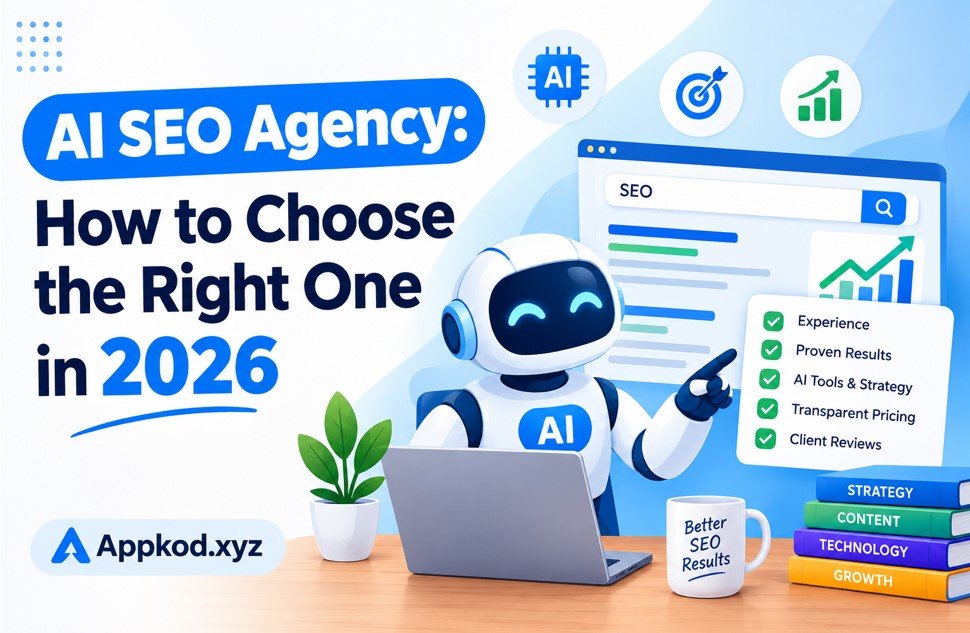
This guide breaks it all down. You’ll learn what an AI SEO agency is, how it’s different from a traditional SEO firm, what to look for before you hire one, and how to avoid common mistakes. By the end, you’ll know exactly how to pick a partner that fits your business goals.
What Is an AI SEO Agency?
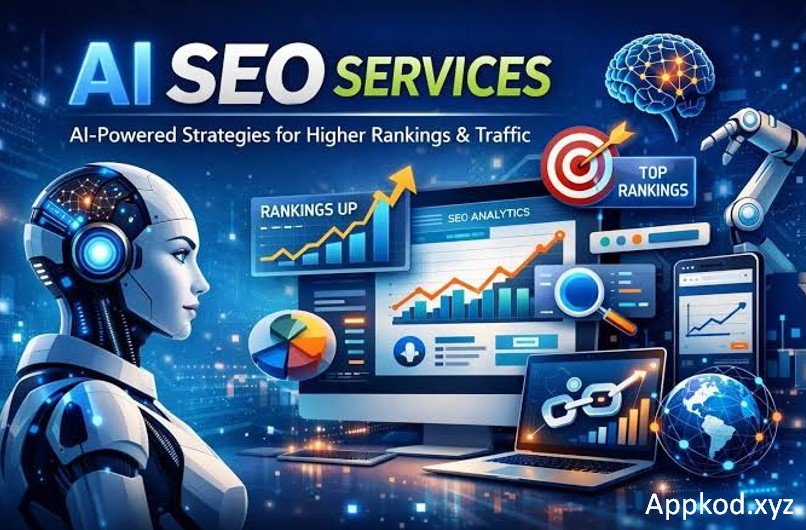
An AI SEO agency is a company that uses artificial intelligence tools alongside human expertise to improve a website’s search rankings. These agencies blend machine learning, natural language processing, and automation with proven SEO strategy.
The goal stays the same as traditional SEO: rank higher, get more organic traffic, and turn visitors into customers. What changes is the process. AI speeds up research, spots patterns humans might miss, and helps content match what search engines and AI-powered answer engines actually want.
It’s important to understand one thing early on. A quality AI SEO agency does not replace human judgment with a machine. Instead, it uses AI as a tool inside a strategy built and supervised by experienced marketers. This distinction matters a lot, and we’ll explain why later in this guide.
How AI SEO Agencies Work
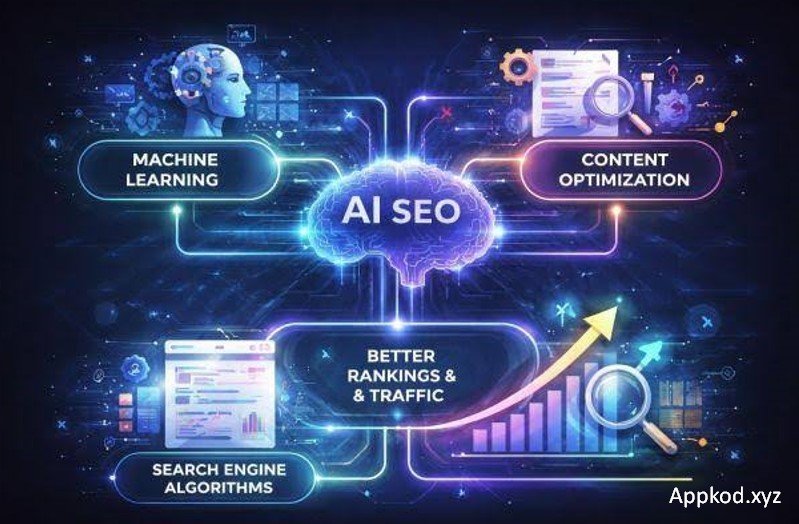
Most AI SEO agencies follow a workflow that combines automated data analysis with human strategy. Here’s a general look at how the process usually unfolds.
Data Collection and Analysis
AI tools scan massive amounts of data in minutes. This includes keyword search volume, competitor rankings, backlink profiles, and technical site issues. A human strategist would need days to gather this manually.
Content Planning
Once data is collected, AI helps identify content gaps and topic clusters. It can suggest which questions your audience is asking that your site doesn’t answer yet. Writers and editors then use these insights to build a content plan that matches real search intent.
Content Creation and Optimization
Some agencies use AI to draft initial content, then have human editors refine it for accuracy, tone, and originality. Others use AI purely for research and optimization while writers create the content from scratch. Either way, the final output should read naturally and pass as genuinely helpful, human-quality writing.
Technical SEO Automation
AI tools can crawl a website and flag technical problems fast. This includes broken links, slow page speed, duplicate content, and missing meta tags. Automating this step saves time and reduces the chance of human error.
Performance Tracking and Adjustment
AI systems monitor rankings, traffic, and conversions in real time. When something isn’t working, the agency can adjust the strategy quickly instead of waiting weeks to notice a problem.
AI SEO Agency vs. Traditional SEO Agency
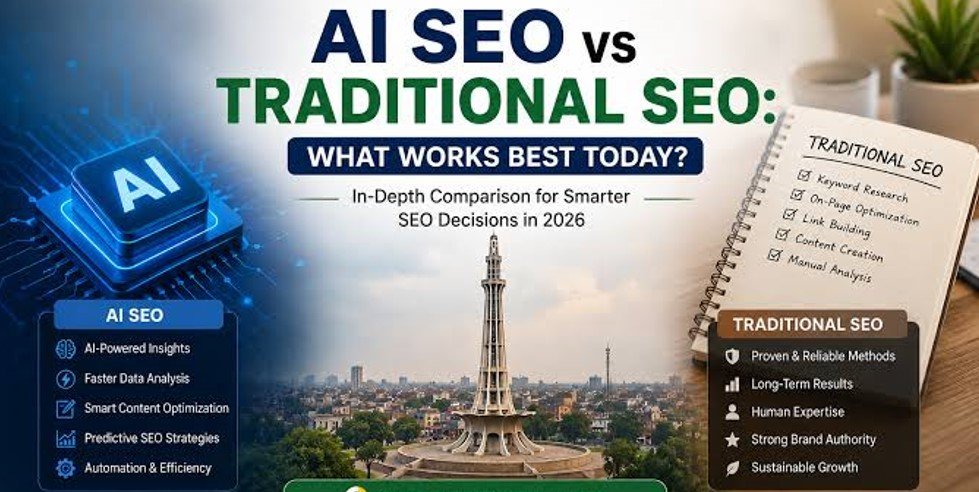
Many business owners wonder if AI SEO agencies are really that different from traditional ones. The answer is yes, in several important ways.ai seo agency
| Factor | Traditional SEO Agency | AI SEO Agency |
| Research speed | Manual, slower | Automated, much faster |
| Content creation | Fully human-written | AI-assisted, human-edited |
| Data analysis | Spreadsheets and manual review | Machine learning pattern detection |
| Scalability | Limited by team size | Can scale faster with automation |
| Personalization | Based on experience | Based on data plus experience |
| Cost | Often higher for large-scale work | Can be more cost-efficient at scale |
| Risk of generic output | Lower if done manually | Higher if AI isn’t supervised properly |
Neither model is automatically better. A traditional agency with skilled writers can outperform a poorly managed AI agency. The real difference comes down to how well a company uses its tools and talent together.
Key Services Offered by AI SEO Agencies
Most AI SEO agencies offer a similar core set of services, though the depth and quality vary widely between providers.
Keyword Research and Intent Mapping
AI tools analyze thousands of keyword variations and group them by search intent. This helps agencies target the right terms instead of just chasing high search volume.
Content Strategy and Creation
This includes blog posts, landing pages, product descriptions, and pillar content. Good agencies still rely on human writers to add expertise, originality, and brand voice.
Technical SEO Audits
AI-powered crawlers detect site speed issues, mobile usability problems, indexing errors, and structured data gaps.
Link Building
Some agencies use AI to identify link opportunities and outreach targets faster, though the outreach itself usually still requires a human touch.
Local SEO
AI helps manage business listings, track local rankings, and analyze competitor performance in specific geographic areas.
AI Search Optimization
This is a newer service. It focuses on optimizing content for AI-generated answers, like Google’s AI Overviews or chatbot-based search tools. This is sometimes called Generative Engine Optimization (GEO) or AI Overview optimization.
Benefits of Hiring an AI SEO Agency
There are real advantages to working with an agency that uses AI effectively.
- Faster turnaround times on research and reporting
- Data-driven decisions instead of guesswork
- Scalable content production for larger websites
- Real-time monitoring of rankings and traffic changes
- Better identification of content gaps competitors are missing
- More efficient technical audits that catch issues early
These benefits add up to faster results and more efficient use of your marketing budget, assuming the agency knows how to use its tools correctly.
Potential Drawbacks to Watch For
AI SEO isn’t perfect. Businesses should go in with realistic expectations.
- Generic content risk. Poorly supervised AI writing can sound robotic or repetitive.
- Accuracy issues. AI can generate confident-sounding but incorrect information if not fact-checked.
- Over-reliance on automation. Strategy still needs human judgment, especially for brand voice and nuance.
- Google’s stance on AI content. Google has stated that content quality matters more than how it’s produced, but low-effort, unedited AI content can still hurt rankings under the Helpful Content system.
The takeaway here is simple. AI should support the strategy, not replace critical thinking.
Pros and Cons Table
| Pros | Cons |
| Faster research and reporting | Risk of generic content if unsupervised |
| Scales well for large sites | Requires human editing for accuracy |
| Identifies content gaps quickly | Can misjudge nuanced search intent |
| Real-time performance tracking | Some agencies overuse automation |
| Often more cost-efficient | Quality varies widely between providers |
How to Choose the Right AI SEO Agency
Picking the right partner takes more than reading a homepage. Here’s what actually matters.
1. Ask About Their Human Review Process
Find out exactly how much human editing happens after AI generates a draft. A strong agency will explain their editorial workflow clearly.
2. Review Case Studies and Real Results
Ask for specific examples: traffic growth, ranking improvements, and conversion increases. Vague promises without data are a warning sign.
3. Check Their Understanding of EEAT
EEAT stands for Experience, Expertise, Authoritativeness, and Trustworthiness. Google uses this framework to judge content quality. A good agency should be able to explain how they build EEAT into every piece of content they create.
4. Ask How They Handle Fact-Checking
Since AI can generate inaccurate information, ask what steps the agency takes to verify facts, statistics, and claims before publishing.
5. Understand Their Reporting Style
You want clear, honest reporting, not vanity metrics. Ask how often you’ll receive updates and what data they’ll show you.
6. Look at Their Communication
A good agency should explain things clearly, without jargon overload. If you can’t understand their explanations, that’s a problem.
7. Confirm They Follow Google’s Guidelines
Make sure the agency follows white-hat SEO practices and Google’s Helpful Content guidelines. Avoid any agency that promises instant rankings or guarantees the number one spot, since no legitimate agency can guarantee exact rankings.
Red Flags to Avoid
Watch out for these warning signs when evaluating an AI SEO agency:
- Guarantees of “#1 ranking” or overnight results
- No clear explanation of their content review process
- Refusal to share past client results
- Pushy sales tactics or pressure to sign long contracts immediately
- Content that reads as clearly AI-generated with no human polish
- Lack of transparency about which tools or AI models they use
Cost of Hiring an AI SEO Agency
Pricing varies based on business size, industry competition, and scope of work. As a general guide:
- Small business SEO packages: Often range from a few hundred to a couple thousand dollars per month
- Mid-size business packages: Usually fall in a broader mid-range monthly range
- Enterprise-level SEO: Can run significantly higher, depending on content volume and technical complexity
Because AI can speed up research and reporting, some agencies offer more competitive pricing than fully manual firms. Still, price alone shouldn’t be the deciding factor. Focus on value, transparency, and proven results instead.
AI SEO Trends Shaping the Industry in 2026
The SEO landscape keeps shifting, and AI is a big part of why. Understanding these trends helps you evaluate whether an agency is truly current or just using AI as a buzzword.
Rise of AI Overviews and Zero-Click Search
Google’s AI Overviews now answer many queries directly on the search page. This means fewer clicks to websites for simple questions. Smart agencies adjust content strategy to target deeper, more specific queries where users still want to visit a full page for details.
Structured Data Becomes More Important
AI systems rely heavily on structured data, like schema markup, to understand page content. Agencies that skip this step risk losing visibility in AI-driven search results, even if their written content is strong.
Content Depth Over Content Volume
Publishing dozens of thin articles no longer works well. Search engines, powered by AI, now favor fewer pieces with real depth, original insight, and clear expertise. This shift rewards quality over quantity.
Personalization at Scale
AI tools now let agencies personalize content recommendations based on user behavior patterns. This helps match content to search intent more precisely than manual research alone could achieve.
Questions to Ask During Your First Consultation
Before signing any contract, use your first meeting to dig into specifics. These questions can reveal a lot about how an agency really operates.
- “Can you walk me through your exact content creation process, step by step?” A confident answer shows real experience. A vague answer is a warning sign.
- “What percentage of your content is AI-generated versus human-written?” There’s no single correct answer, but transparency matters more than the specific number.
- “How do you measure success beyond rankings?” Look for answers involving traffic quality, conversions, and revenue impact, not just keyword positions.
- “What happens if results don’t meet expectations after six months?” This shows how the agency handles accountability.
- “Can I speak with a current client as a reference?” Reputable agencies are usually willing to connect you with satisfied clients.
Taking notes during this conversation and comparing answers across two or three agencies will make your final decision much easier.
Frequently Asked Questions
1. What does an AI SEO agency actually do?
An AI SEO agency combines artificial intelligence tools with human strategy to improve search rankings. This includes keyword research, content creation, technical audits, and performance tracking, all supported by data analysis and automation.
2. Is AI SEO better than traditional SEO?
Not automatically. AI SEO can be faster and more data-driven, but quality still depends on skilled humans reviewing and refining the work. The best results come from combining AI efficiency with human expertise.
3. Will Google penalize AI-generated content?
Google has stated it does not penalize content simply because AI helped create it. What matters is whether the content is helpful, accurate, and written for real people, not just to manipulate rankings.
4. How much does an AI SEO agency cost?
Costs vary widely based on business size and goals, often ranging from a few hundred to several thousand dollars per month. Always ask for a clear breakdown of what’s included before signing a contract.
5. How long does it take to see SEO results?
Most SEO campaigns, whether AI-assisted or traditional, take three to six months to show meaningful results. Anyone promising instant rankings should be treated with caution.
6. Can AI SEO agencies guarantee first-page rankings?
No legitimate agency can guarantee an exact ranking position, since Google’s algorithm considers hundreds of factors. Be wary of any agency that makes this promise.
7. What is Generative Engine Optimization (GEO)?
GEO refers to optimizing content so it appears in AI-generated answers, like Google’s AI Overviews or chatbot search tools. It’s an emerging area many AI SEO agencies now offer alongside traditional SEO.
8. Do AI SEO agencies write content entirely with AI?
It depends on the agency. Reputable ones use AI for research and optimization but rely on human writers and editors to ensure originality, accuracy, and brand voice.
9. How do I know if an AI SEO agency is trustworthy?
Look for transparent reporting, real case studies, a clear content review process, and adherence to Google’s guidelines. Avoid agencies that make unrealistic promises or hide their methods.
10. Is AI SEO suitable for small businesses?
Yes. Many small businesses benefit from the speed and cost-efficiency AI tools provide, especially for keyword research and technical audits. Just make sure the agency still applies human judgment to strategy and content.
Conclusion
An AI SEO agency can be a smart choice for businesses that want faster research, better data insights, and more scalable content production. But AI alone isn’t a magic solution. The agencies that deliver real results are the ones that pair smart automation with skilled human strategists who understand your industry, your audience, and your goals.
Before hiring one, ask direct questions about their process, review their past results, and make sure they follow Google’s guidelines around helpful, trustworthy content. Choose a partner that treats AI as a tool for better decisions, not a shortcut around real strategy. That approach is what turns AI-powered SEO into long-term, sustainable growth.